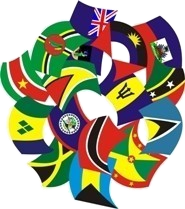


Architects of the Caribbean
T.A. Marryshow:
Theophilus Albert Maricheau (7 November 1887 - 19 October 1958) was born in Grenada. In 1903, he took a job with William Galwey Donovan, who was a newspaper publisher and printer. His company produced newspapers, advocating representative government and a West Indian federation. Marryshow advanced quickly from delivering newspapers to being a competent journalist and then sub-editor of the St. George's Chronicle and Grenada Gazette in 1908. At the same time, he became active in local politics. Together with C. F. P. Renwick, Marryshow established a new paper, The West Indian, which advocated a Federation of the West Indies. Marryshow co-founded the Grenada Workingmen’s Association in 1931 and in 1945 was appointed as the first president of the Caribbean Labour Congress. He visited London to lobby the British Colonial Office in favour of a Federation in 1931. A new constitution for Grenada was approved in 1935, adding additional elected representatives to the Legislative Council. In 1951 the first election under full adult suffrage was held and Eric Gairy became the country’s first prime Minister. Marryshow retained his seat and was made Deputy President of the Legislative Council. In the Caribbean he became known as the "Father of the Federation. (Marryshow is the Anglicised version of his surname which he adopted at an early stage)
Albert Gomes
Albert Maria Gomes (25 March 1911 – 13 January 1978) was born in Belmont, Port of Spain, Trinidad. Gomes was a Trinidadian unionist, politician, and writer. He studied journalism at City College of New York between 1928 and 1930. Returning to Trinidad, Gomes established a literary magazine called The Beacon, the first of its kind in the country. In 1938 he was elected to the Port of Spain City Council. He served on the Council for nine years and was Deputy Mayor for three years. In 1945, he was elected to the Legislative Council in a by-election. He was re-elected to the revamped Legislative Council in 1946 as a member of the West Indian National Party (WINP) for Port of Spain North. He retained that position until the 1956 General Elections when Eric Williams and the People's National Movement (PNM)won. He was the first Chief Minister of Trinidad and Tobago and the founder of the Political Progress Groups and later led the Party of Political Progress Groups. He was active in the formation of the Democratic Labour Party (DLP) in Trinidad and Tobago. Gomes briefly led DLP in 1963.
The Hon. Linden Forbes Burnham:
Linden Forbes Sampson Burnham OE (20 February 1923 – 6 August 1985) was a Guyanese leader of the Co-operative Republic of Guyana from 1964 until his death in 1985. He served as Premier of British Guiana from 1964 to 1966, Prime Minister of Guyana from 1964 to 1980 and then as the first executive president of Guyana (2nd president overall) from 1980 to 1985. In 1965, Burnham along with Errol Barrow of Barbados, Eric Williams of Trinidad and Tobago and Michale Manley of Jamaica were the founders of the Caribbean Free Trade Association (CARIFTA), which came into operation on 1 May 1968. CARIFTA was then superseded by CARICOM in 1973.
The Most Hon. Percival Patterson
Percival Noel James Patterson, ON, OCC, KC (born 10 April 1935), served as the sixth Prime
Minister of Jamaica from 1992 to 2006.
P.J. Patterson began political activity at the UWI where he was one of the founders of the
Political Club. As its President, he presided at the first political address given in the
Caribbean by the late Dr. Eric Williams, founder of Trinidad and Tobago’s People’s National
Movement. After graduating from the UWI he joined the PNP’s organising staff in 1958. He
moved on to membership on the National and Executive Councils in 1964. He was elected a
Vice-President of the PNP in 1969 and served as Party Chairman from 1983.
Mr. Patterson’s distinguished Cabinet career began in 1972, with his appointment as Minister of Industry, Trade
and Tourism. He also he served as Deputy Prime Minister and Minister of Foreign Affairs and Foreign Trade
(1978-1980); Deputy Prime Minister and Minister of Development, Planning and Production (1989-1990) and
Deputy Prime Minister and Minister of Finance and Planning (1990-1991). Mr. Patterson served as Prime
Minister until March 2006 when he retired.
Following his retirement from public office, Mr. Patterson has remained actively engaged in national, regional
and global affairs. Among other things, he is Chairman of the International Advisory Board of the Caribbean
Research & Policy Centre Inc. (CRPC), based in Washington DC, a think-tank dedicated to in-depth research and
analyses for the positioning of CARICOM states on issues relating to international trade, development, the
economy, society, politics, security and the environment.
In June 2020 he was appointed Statesman in Residence at the PJ Patterson Centre for Africa-Caribbean Advocacy
at the University of the West Indies. In that capacity, Mr. Patterson is responsible for coordinating technical
analysis for academic exchange and institutional collaboration in the areas of trade policy, cultural interaction,
governance, climate change and other critical areas.
Sources:https://www.inafricara.com/pj-patterson/ and https://nlj.gov.jm/project/rt-hon-percival-james-
patterson-1935/
Image source: https://nlj.gov.jm/project/rt-hon-percival-james-patterson-1935/)
The Hon. Rex Nettleford
Ralston Milton "Rex" Nettleford OM FIJ OCC (3 February 1933 – 2 February 2010) was a Jamaican scholar, social critic, choreographer, and Vice-Chancellor Emeritus of the University of the West Indies (UWI). Nettleford’s intellectual brilliance and artistic creativity as a choreographer and dancer were recognized from his high school days. He left on scholarship to the then fledgling University College of the West Indies (London University) to read for a degree in history, he subsequently attended Oxford University as a post graduate Rhodes Scholar in politics. His choice of disciplines for study was quite deliberate since he had every intention of participating in the dismantling of the colonial regime extant. On his return home, he was assigned to the UWI’s Extra Mural Department. This department provided Nettleford the perfect vehicle for linking town and gown at two levels: The first was as an academic, where it allowed him to hone in on matters that touched the lives of ordinary citizens. At a second level, it also facilitated engagement with the public, non-formally as well as non-traditionally. It was therefore not surprising that Rex Nettleford co- founded the National Dance Theatre Company of Jamaica (the NDTC), coinciding with the independence of his native land. In 1975 Professor Nettleford was made a member of the Order of Merit – the highest non-political national honour of Jamaica. In 1996 he was selected to be Vice Chancellor of the University of the West Indies. In the international arena, Nettleford has received some fourteen honourary degrees from universities including the University of Oxford whose Oriel College also made him one of its Fellows. He has served in various leadership capacities on numerous regional and international bodies including, CARICOM and the West Indian Commission, the IDRC, UNESCO, the ILO and the OAS. Nettleford has helped to shape and project the Region so profoundly, as a professor, a dancer, a writer, a manager, an orator, a mentor, a critic, an international icon, a true Ambassador of the Caribbean.
The Hon. Norman Manley
Norman Washington Manley ONH MM QC (4 July 1893 – 2 September 1969) served as Jamaica’s first and only Premier of Jamaica. Manley served as the country’s Chief Minister from 1955 to 1959, and as Premier from 1959 to 1962.
Tubal Uriah Butler:
Tubal Uriah "Buzz" Butler (21 January 1897 – 20 February 1977), was a Grenadian-born Spiritual Baptist preacher and labour leader in Trinidad and Tobago. He is best known for leading a series of labour demonstrations between 19 June and 6 July 1937 and for forming a series of political parties (the British Empire Citizens' and Workers' Home Rule Party, the Butler Home Rule Party, and finally the Butler Party) that focused its platform on the improvement of the working class. In 1918, he became active in political pressure groups and workers unions, establishing the Grenada Representative Government Movement, and the Grenada Union of Returned Soldiers. In 1921, aged 24, he went to south Trinidad and was employed at the Roodal Oilfields. He led a "hunger march" in 1935 from the oilfields to Port of Spain. In 1936 he formed the British Empire Citizens' and Workers' Home Rule Party. In 1939 he formed the Butler Home Rule Party, which later became the Butler Party. The Butler Party captured the largest block of seats in the Legislative Council, but the Governor chose to exclude Butler and instead Albert Gomes became the first chief minister. Butler is regarded as the founding father of the Oilfields Workers' Trade Union (OWTU) and the labour movement.
Tubal Uriah Butler:
Errol Walton Barrow PC QC (21 January 1920 – 1 June 1987) was a Barbadian statesman and the first prime minister of Barbados. In December 1961, his party won the general election with Barrow as its leader. He then served as Premier of Barbados from 1961 until 1966 when, after leading the country to independence from Great Britain, he became the island's first Prime Minister. Barrow was a dedicated proponent of regional integration, spearheading the foundation of the Caribbean Free Trade Association (CARIFTA) in 1965. Eight years later CARIFTA evolved into the Caribbean Community (CARICOM), when Barrow, together with Forbes Burnham of Guyana, Dr. Eric Williams of Trinidad and Tobago and Michael Manley of Jamaica enacted the Treaty of Chaguaramas to bolster political and economic relations between the English-speaking Caribbean territories
The Rt. Hon. Eric Williams
Eric Eustace Williams TC CH (25 September 1911 – 29 March 1981) was a Trinidad and Tobago politician. He led the then British Colony of Trinidad and Tobago to majority rule on 28 October 1956, to independence on 31 August 1962, and republic status on 1 August 1976. Dr. Williams had for years advocated for the establishment of a Caribbean Economic Community, therefore after the signing of the initial CARIFTA Agreement (the Agreement of Dickenson Bay in Antigua) on December 15, 1965 between Barrow, Burnham and V. C. Bird, Williams joined the agreement thereby making it a region wide one.
Sir Shridath Ramphal
Sir Shridath Surendranath Ramphal GCMG AC ONZ OE OCC NIIV OM KC FRSA, (3 October
1928 – 30 August 2024) was a Guyanese politician who served a Cabinet Minister in the
Guyana Government and also as Secretary-General of the Commonwealth for fifteen
years - 1975 to 1990.
His involvement with the movement for a West Indies Federation as Assistant Attorney
General marked the commencement of a distinctive record of advancing the process of
Caribbean development. As Chairman of the West Indian Commission, he functioned as draughtsman for the
reconstruction and development of Caribbean society. In spite of his high international standing and involvement
in international affairs, he remains loyal and dedicated to the issues of development in his Caribbean homeland
and provided yeoman service as Chancellor of the University of the West Indies and the University of Guyana. Sir
Shridath received the honour of membership of the Order of the Caribbean Community in the first conferment of
1992.
Source: https://caricom.org/personalities/sir-shridath-ramphal/
Image source: https://www.stabroeknews.com/2023/12/11/news/guyana/sir-shridath-offers-support-for-ali-
maduro-talks/
The Hon. Lloyd Best
Lloyd Algernon Best, OCC (27 February 1934 – 19 March 2007) was an acclaimed
Trinidadian intellectual, economist, politician and publicist.
Lloyd Best developed a close relationship with the University of the West Indies,
beginning his illustrious multifaceted career as a Junior Research Fellow in 1958 at
the Institute of Social and Economic Research of the UWI in Jamaica.
Known for his radical non-conventional philosophies, Lloyd Best was not the passive
participant in the Region’s status quo, daring to disagree and advance cogent alternative viewpoints about the
political, economic and intellectual realities of Caribbean society. This relationship solidified with his tenure at the
St. Augustine Campus as a Lecturer in Economics. In the 1960s, he co-founded the New World Group of
independent thinkers who theorised and philosophised about the economic, social and political systems of their
time.
This intellectual giant of the Caribbean stimulated a rethinking of accepted models and practices in institutions of
politics and economics and development as a whole, giving direction to the principles that support the
establishment and continuity of the Caribbean integration movement.
Source: https://caricom.org/personalities/lloyd-algernon-best/
Image source: https://caricom.org/personalities/lloyd-algernon-best/
Sir Alister McIntyre
Meredith Alister McIntyre (1930 - April 20, 2019) born in St. Georges, Grenada, served
as CARICOM Secretary-General from 1974 to 1977. He was able to position the
Caribbean region on the world scene and made a significant impact on the international
arena through the many high-level posts he held in various UN organisations and in a
consultative capacity to Regional and International Financial Institutions, such as the
IDB and the World Bank.
Source: https://caricom.org/personalities/sir-meredith-alister-mcintyre/
The Hon Michael Manley
Michael Norman Manley ON OM OCC PC (10 December 1924 – 6 March 1997) was a Jamaican politician who served as the fourth prime minister of Jamaica from 1972 to 1980 and from 1989 to 1992. Manley championed a democratic socialist program, and has been described as a populist. He remains one of Jamaica's most popular prime ministers. As one of the founders of the Caribbean Free Trade Association (CARIFTA), Manley’s vision for Caribbean integration was consistent with Caribbean liberation and suzerainty, intimately linked to the development of a more equitable and just society, consistent with the struggle against foreign exploitation of Caribbean resources, and independent foreign policy, free from the dictates of hemispheric political, economic and ideological hegemony.